Platforms that hand you work instead of making you chase it
There are platforms where you can earn extra money without finding clients, writing proposals, or getting on video calls to get hired. They give you the work, you do it on your own from home, and you get paid.
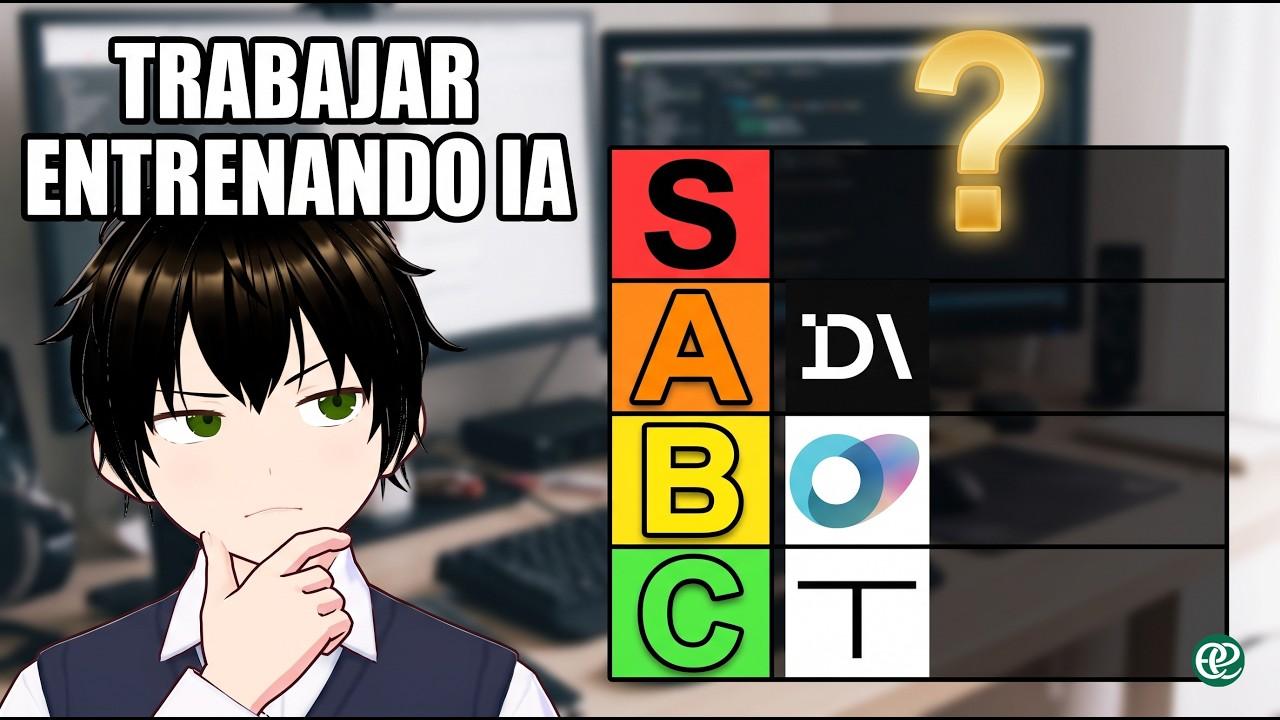
In this guide I go through ten platforms where you genuinely earn, with rates of 20, 30, and up to 70 dollars an hour, ranked in a tier list from D to S. I am a software engineer and I know this type of platform very closely.
The 3 criteria the list is ranked by
1. How much you really get paid per hour.
2. How much work there is. A high rate on a platform where projects never show up is worth zero.
3. How much social friction it demands. If you have to land clients, negotiate prices, or take calls, it scores lower.
Tier D — Upwork: the job is getting the job
Upwork is a freelance services platform, and it is not a bad platform: it is huge, it is legitimate, and plenty of people make a living from it. But the problem is structural for what we are after here: on Upwork the work is not the work, the work is getting the work.
You have to write proposals constantly, compete against hundreds of people for every project, negotiate prices, and do video calls before anyone hires you. And when you start with no reviews, the usual result is earning between 0 and 300 euros in the first months. Not because you work little, but because you spend your time trying to get someone to give you a chance.
If what you want is to get paid for working, not for selling yourself, this is not your platform.
Tier C — Outlier and Gumroad
We open tier C with two platforms that could not be more different from each other.
Outlier: the famous one that disappoints
I know this will surprise some people, because it is the most famous AI training platform and it shows up in every ad. Its strengths are real: it has the highest rate ceiling on this list, with projects for specialists paying very high figures, and it is accessible from almost any country.
But they have moved to a project assignment system on the fly, and the result is that you can have three weeks loaded with work and then two with absolutely nothing, even if your ratings are good. On top of that comes slow support, with people reporting waits of days or weeks to resolve payment problems, and account closures with no clear explanation.
You can make money on Outlier, and quite a lot. But if you are looking for something to count on every month, it will drive you up the wall.
Gumroad: you sell something you make once
Here you are not selling your time: you are selling something you made once. You upload digital products, templates, spreadsheets, or resources, and the platform handles payment and automatic delivery. The customer buys, downloads, and that is it: no meetings, no negotiation, and no real-time support.
Creators with two or three well-optimized products bill between 100 and 500 euros a month passively. And the difference is not in the design, it is in being specific: a generic product is invisible among a thousand identical ones; one aimed at a very specific niche has far less competition and more willingness to pay.
Why tier C if the model is so good? Two reasons. First, Gumroad has no traffic of its own, so you have to bring it yourself from social media or a website, and getting your product known is not easy at all. Second, the first months are slow and a single template rarely goes past 50 euros a month: this works with a catalog, not with a single product.
Tier B — Clickworker, UserTesting, and ElevenLabs
Tier B rewards consistency and accessibility more than rate.
Clickworker: the most accessible
Clickworker, despite paying the least of the whole list, rises to tier B because it nails the consistency criteria: getting in is practically guaranteed, it accepts almost any country, it does not put you through brutal elimination exams, and there is always something to do. There are no three-week droughts staring at an empty screen, which is exactly the problem that sinks other platforms on this list.
The work is microtasks: data categorization, short transcriptions, text review. All solo, asynchronous, and client-free. And it has a side door many people do not know about: from inside you can unlock access to UHRS, an external platform with thousands more microtasks, by passing a small test.
The honest part is that the rates are the most modest on the list and on its own it will not give you meaningful income. But as a cushion for the days when the better ones have no projects, and to understand how this world works, it does the job perfectly. Tier B for consistency, not rate. You have the deep dive in the guide on Clickworker and how to unlock UHRS.
UserTesting: you get paid to say what you think out loud
You get paid to test websites and apps while recording your screen and your voice as you say out loud what you are thinking. The rates are good: around 10 dollars for about 20 minutes, and between 30 and 60 dollars for longer moderated sessions. Per hour, it is among the best paid in its category.
And even though you have to talk to earn something extra, the reality is you are not talking to anyone: you are recording alone, with nobody listening live or interrupting you. It is a monologue, not a conversation, and many people find they are good at it precisely because they can think without someone in front of them waiting for a reply.
It stays in tier B because of availability. There is an entry test and competition for tests is brutal: one person applied to 46 tests without landing any, while other users get several a day. The difference is having notifications on and grabbing tests as fast as you can. You have the full guide in UserTesting: how to pass the exam.
ElevenLabs: record once and get paid indefinitely
ElevenLabs is the only one on the list that works without you doing anything after day one. You upload a clone of your voice to its marketplace, and every time someone in the world generates audio using it, you earn a share. The platform has already paid out more than 22 million dollars for this, with more than 10,000 people earning right now.
The model is unique on the whole list: you record once and get paid indefinitely. No clients, no deliveries, no deadlines, nothing to maintain. And right now most voices in the catalog are in English, so a native Spanish speaker with good diction enters a segment with far less competition.
Why only tier B when it sounds so good? Because it is the least predictable of all: your income depends on people choosing your voice among thousands, and that is out of your hands. It can work very well or generate almost nothing. The right way to see it is as a cheap lottery ticket worth buying: upload your voice, forget about it, and if it earns, great. But do not count on it to pay for anything. More detail in making money with ElevenLabs.
Tier A — Prolific, DataAnnotation, and Alignerr
We enter tier A: reliability, transparency, and high rates, with some catch on entry or continuity.
Prolific: a guaranteed minimum hourly rate
Prolific is about answering studies published by universities and researchers, and it has a rule no other platform in its category has: it forces researchers to guarantee a minimum hourly pay. You cannot publish a twenty-minute study for thirty cents because they do not allow it, which is why you see the hourly rate written on the card itself before you enter.
On top of that, if you get screened out of a study when you were halfway through, most of the time they compensate you anyway for the time invested, something few platforms of this kind do.
Tier A for reliability and transparency. The catch is that there is sometimes a waiting list depending on your country, and good studies fill up fast, so you need to keep an eye on notifications. More in Prolific: reviews and tricks.
DataAnnotation: high, stable pay, tough entry
DataAnnotation has rates starting around 20 dollars an hour and rising notably on technical and programming projects. The work is training and evaluating AI models: comparing responses, correcting texts, judging which of two outputs is better. If you get accepted, you are assigned work and do it alone from home, and its work queue is considerably steadier than Outlier's, with far fewer droughts.
So if it pays well and there is work, why is it not in tier S? Because of the front door, which is the toughest on the whole list: you have to do sample tasks, the process is a black box where they explain nothing, and you only get a single attempt. There is no second chance. If you apply, take it very seriously and give it real time: you have the guide in DataAnnotation: how to pass the test.
Alignerr: the most transparent project board
Alignerr is an established data infrastructure company that works behind a good part of this industry. It works in the most transparent way I have seen: instead of a generic queue of tasks that drop on you, it has a project board where you see the hourly rate written before you apply. You pick the one you like and sign up. No more accepting work without knowing what you will be paid.
Community-reported rates run from about 15 to 60 dollars an hour depending on the project. And its entry barrier is considerably friendlier than DataAnnotation's, so if you want to start in this sector without betting everything on a one-attempt test, this is where I would get in.
What keeps it at A and not S is that, since it works by projects, when one ends you go back to the board to apply again, and there can be waits between them. The transparency and payments are good, but continuity is not guaranteed.
Tier S — micro1: the best paid, without talking to anyone
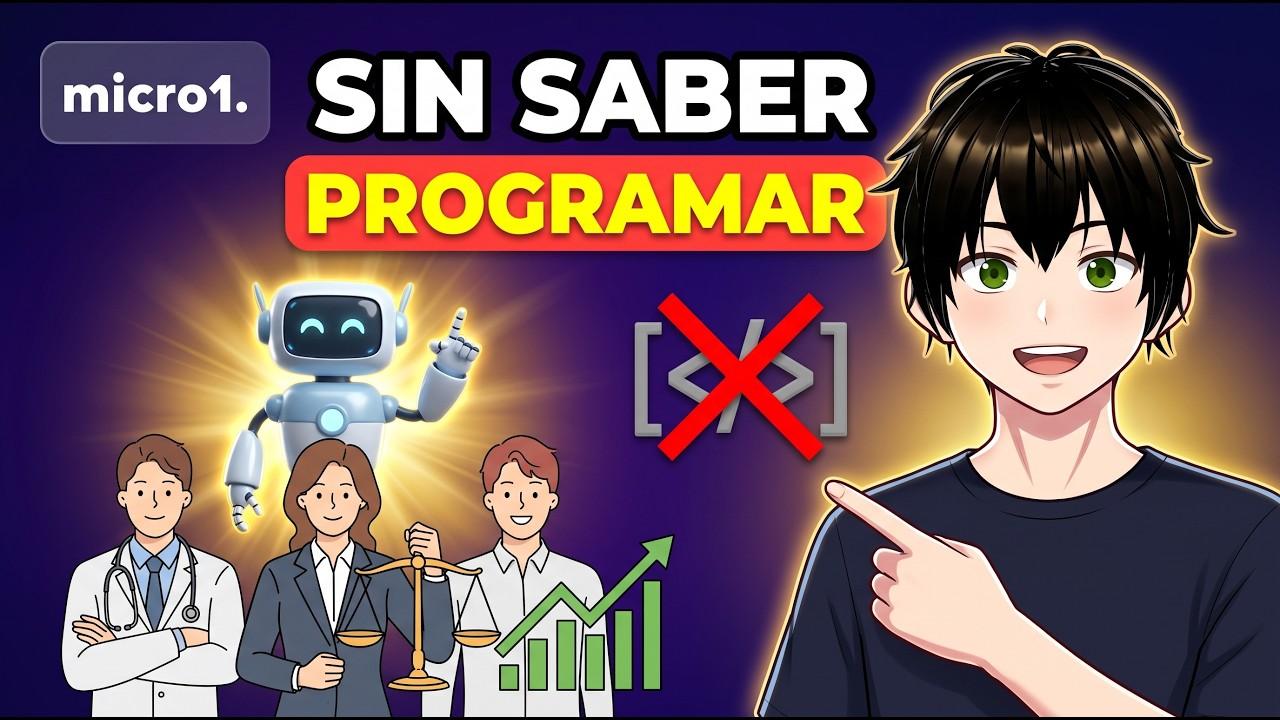
Tier S has a single name: micro1.
It works with leading AI labs looking for human experts, and it is not just for programmers: they hire doctors, lawyers, economists, linguists, and PhDs in any scientific field, because to train an AI model on legal or medical reasoning they need someone who knows law or medicine, not a computer scientist.
The average rate advertised on the platform is around 70 dollars an hour, with a usual range of 40 to 105. It is, by a wide margin, the best paid on the whole list.
And the entry interview is run by an AI and is recorded, not live: you do it whenever you want, at your own pace, with nobody on the other end waiting. In the entire entry process you do not speak to a single human being. Zero clients, zero negotiation, zero video calls, and the highest rate on the list: tier S without debate. The catch is that there can also be waits between projects. You have the full process and how to prep the interview in micro1: Zara interview and rates.
The full tier list and how to combine it
A recap of the list: tier S, micro1. Tier A, Prolific, DataAnnotation, and Alignerr. Tier B, Clickworker, UserTesting, and ElevenLabs. Tier C, Outlier and Gumroad. And tier D, Upwork.
Apply to micro1 if you have a clear specialty to bring, because that is where your knowledge is worth the most money, by far. Apply to DataAnnotation too even if getting in is not certain, because you lose nothing but a little time and the rates justify it. And if you have a good voice, upload it to ElevenLabs and forget about it, understanding that it is a cheap lottery ticket and not a plan.
And most important of all: do not depend on just one. In this sector inconsistency is not the flaw of a specific platform, it is the nature of the industry. When one goes into a drought, and it will, the others carry your month.
The idea that ties the whole list together: these platforms pay you for what you do, not for how well you sell yourself. It is a market where your competition is other workers and the work they do, not how well they sell. If you do the work well, you move up. As simple as that.
You have the platforms on this list, with their analysis, in the comparison of best platforms to train AI and in the complete directory.