The trap that sinks most new stores
Setting up an entire online store — the design, the products, the photos, the descriptions, the prices — can be done in a week with zero coding knowledge. What used to take months now gets done by a couple of tools for you.
But there is an important warning right from the start, because it is the reason most people who try this quit after two months: the hard part was never setting up the store. The hard part is a few other things almost nobody talks about, and that is what this guide covers.
Here is the full process in three phases, with the specific tools you will need, and at every point I will tell you where the trap is.
Phase 1: the store
The decision here is simple because there is a clear standard: Shopify. Not because it is the cheapest, because it is not, but because it connects with everything else you are going to need, which saves you a ton of headaches down the line.
It has a free trial so you can try it without paying anything, and afterward it starts very cheap for the first few months, so testing whether this is for you does not require a big investment.
When you open the tool for the first time, you get a setup checklist telling you what is left to configure: adding your first product, choosing your store design, checking payments, setting up your own domain, and reviewing shipping rates. If you do not know where to start, follow that list top to bottom; it is not complicated at all and it walks you through everything.
The first thing to check: how customers will pay you
Shopify has its own built-in payment system, which is the most convenient option, but it is not available in every country. If you are in Spain, you have it with no issues. But if you are in Latin America, it depends on the country, and in several it is not available, so you will need to connect a local gateway like Mercado Pago to be able to charge customers.
So the real first step, before picking products or anything else, is to go into payment settings and check what options show up for you.
Phase 2: products (and the big trap)
This is where this guide departs from most of what you will find out there, because this is the decision that really determines whether your store works or not.
What you will usually be told is to connect your store to a huge catalog of cheap products and import whichever ones look promising with one click. And that works technically: you can have fifty products in your store in half an hour, with photos, prices, and reviews, and on top of that an AI rewrites the titles and descriptions so they sound good and rank well.
The trap: shipping times
Those cheap catalogs ship from the other side of the world, and the real delivery time is between two and six weeks.
Think about what that means. Someone buys a twenty-euro product from you today and it arrives a month and a half later. By then they have already had second thoughts, already messaged you three times asking where their order is, and most likely requested a refund. And the worst part is not losing that sale: it is that the customer never comes back, and on top of that talks badly about your store. You cannot build anything on top of that.
The fix in Europe: suppliers with nearby warehouses
If you sell in Spain or Europe, what you want is a supplier with a European warehouse. The best known is BigBuy, which holds its own stock in Europe and delivers in one to seven days. The catch is it runs on a monthly subscription and is not cheap, so it is not for getting started while testing, it is for once you already know your product sells. The alternative with no fixed cost is print-on-demand with Printful, where you design and they manufacture and ship when someone buys, in three to seven days.
The fix in Latin America: cash on delivery
If you sell in Latin America, the dominant model is completely different, and much more interesting: it is called cash on delivery. The customer does not pay online, they pay in cash to the courier when the package arrives at their home. That instantly solves the biggest problem in the region: a huge number of people do not trust entering their card details on a store they do not know.
The most used platform for this is Dropi, which operates in a dozen countries across the region. Suppliers are local and hold stock right there, so they ship in one or two days instead of six weeks, it connects with your store, and once delivery is confirmed your margin lands in your wallet and you move it to your bank.
The honest number nobody tells you
With the cash-on-delivery model, the return rate runs between 20% and 35%. That means out of every ten packages you send, two or three come back because the customer was not home, changed their mind, or simply refused to pay.
I am not telling you this to discourage you, I am telling you because it is a structural part of the model and you need to build it into your numbers from day one. If you calculate your margin assuming you will collect on all ten sales, you will lose money without understanding why. If you calculate it assuming three fall through, the business still works out, and you sleep easier too.
Phase 3: sales
This is the phase people skip, and the reason they fail. You can have the prettiest store in the world with the best products, but if nobody walks in to see it, you will not sell a single thing. A store with no visitors is a shop window in the middle of the desert.
Here are the three ways to bring people in, two of them free.
1. Niche theme pages
The one I would do if starting from zero with no money. Instead of opening an account for your store, which nobody cares about, you open an account about your niche. If you sell dog products, you start an account of funny dog videos, or training tips, or fun facts. Content people actually want to watch and share.
Once you have a few thousand followers who are exactly your target audience, you start slipping in your products now and then. You are not interrupting anyone, you are showing them something that fits what they already like. It is slow, no doubt about it, but it is free, and what you build is yours forever.
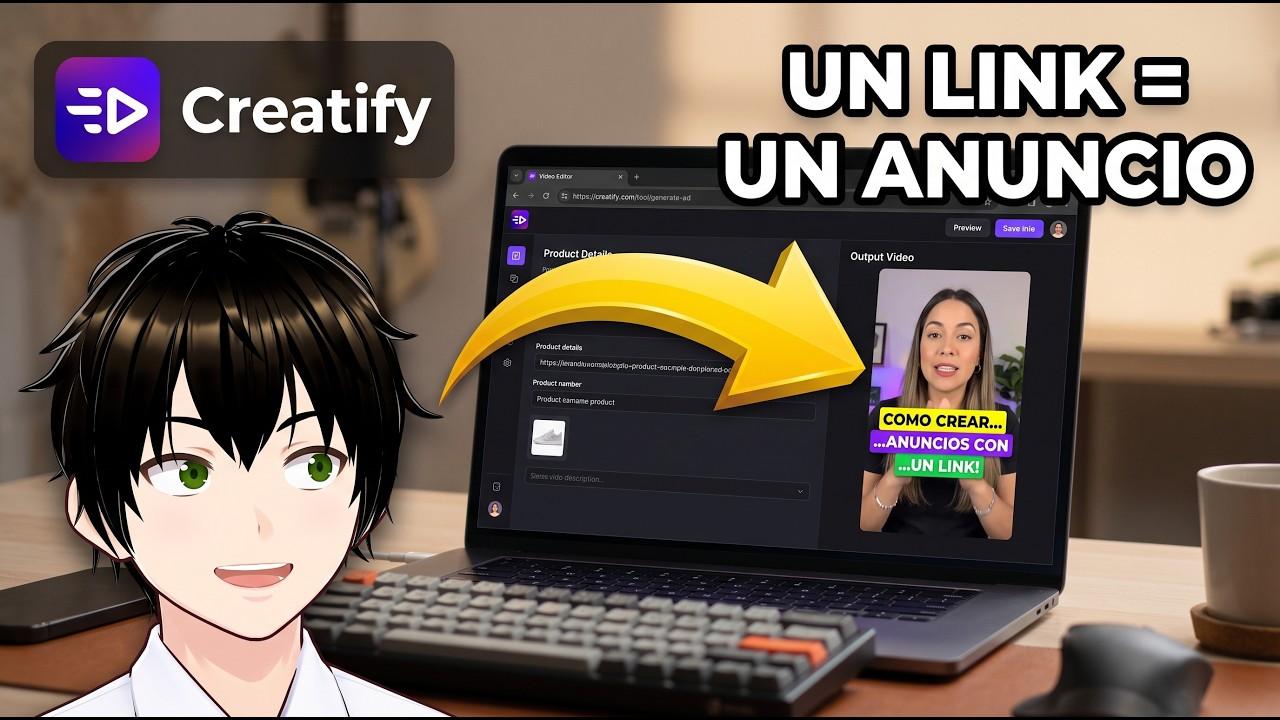
And so you do not have to film yourself or appear on camera, this is where AI comes in: Creatify lets you paste your product link, pick an avatar and a voice, and it generates the entire promotional video with narration and subtitles in a couple of minutes. You can put out ten different variations of the same product in the time it would take you to film just one, and that matters more than it sounds: on social media you never know which video is going to take off, so what makes the difference is not making one perfect video, it is being able to make many and keep the one that pulls. Full guide in Creatify: creating ads with AI.
2. Paid ads
Yes, they work, and they are the fastest way to get visitors. But if you have never done this before, you can burn through two hundred euros in three days without a single sale and without understanding what happened. Ads are not a magic button, they are a skill learned by making mistakes, and every mistake comes out of your pocket.
My advice is not to touch this until you have already sold something through the other two channels, because by then you already know which product people want and which message convinces them, and ads work to pour fuel on something that already works. Use them before that, and what you are really doing is paying to discover things you could have discovered for free.
3. Micro-influencers
The one fewest people use, and the best effort-to-result ratio of the three. Do not reach out to the big ones, they will not answer you and would ask for more than you have. Look for small accounts in your niche, the kind with a few thousand very loyal followers. Message them, offer them their own discount code with a commission on every sale it brings in, and you create that code yourself from Shopify's discounts section in two minutes.
The beauty of this is that it costs you absolutely nothing upfront. You only pay if they actually sell. You can have twenty people promoting your products without spending a single euro, and if none of them sell anything, you have lost nothing but the time it took to message them. It is the only form of advertising in this guide where the risk is literally zero.
Who this is really for
And now the part that needs saying even if it is not what you want to hear.
This is not fast money and it is not guaranteed. There is a ton of content out there showing screenshots of huge first-week sales, and that is not the norm. The norm is setting up the store, selling nothing for fifteen days, switching products, trying another one, and starting to understand what works after a few months.
So who is this for? For someone who wants to genuinely learn how selling online works. Look at what you have picked up just from this guide: how to set up a store, how to choose products, how logistics work, how to get someone to visit your site, and how to calculate a real margin. Those are skills worth money on their own, and they do not disappear even if this specific store does not work out.
One practical note to close: if this starts actually selling for you, you stop being someone trying something online and become a business, and that comes with tax obligations in any country. Find out what applies in yours before the problem comes looking for you.
All the tools from this guide, together, are in the Businesses tab.
You have the rest of the ways to make money online we test, one by one, with what each really pays and its downsides, in the complete directory, and more AI business models in 6 AI businesses that actually pay.