7 Ways to Get Extra Cash This Week (Forget AI Businesses)

·11 min read

Forget the AI business: this is money for this week

Everyone is trying to sell you an automated AI business that will make you rich while you sleep. If what you actually have is a bill due on the 30th, that advice is useless right now. This guide is the opposite: seven real ways to get extra cash, ranked from smallest to largest. We start with what you can do from the couch in ten minutes, move on to what pays the same day, and end with the two that can genuinely move the needle for the whole month.

Spoiler on the last one: it can be worth thousands of euros

Do not skip this one

If you bought a new car in Spain between 2006 and 2013, you very likely overpaid because of a manufacturers' cartel. You can claim between 2% and 5% of the car's price plus interest, but the deadline for most brands has either already passed or is closing in the coming weeks. We walk through the real dates at the end of the article.

1. Reward apps: the easiest one of all

We start with the simplest option, the one you can have running in two minutes without leaving the couch. These are apps that pay you for trying offers, installing games, and taking short surveys from your phone. The trick is to use them during dead time (the bus, a queue, a waiting room) rather than sitting down for a whole afternoon: the hourly rate doesn't reward long sessions. You can find the full list, with what each one pays and its minimum cashout, in our best reward apps for your phone guide and in the online microtasks category.

The one rule that applies to all of them

Cash out as soon as you can, and don't let your balance pile up chasing "the big prize". Problems on these platforms almost always show up on large withdrawals, never on small, frequent ones.

2. Prolific: the best-paying survey platform

The second option is still couch-based, but it pays noticeably better: it's the highest-rated academic research platform in the space. Prolific is different from a normal survey app because there are no brands selling you anything here. Studies are posted by universities and research institutes, which is why the platform forces them to meet a minimum hourly rate and disclose the estimated duration before you join. The absolute minimum Prolific requires researchers to pay is £6 (about $8) per hour, though it recommends £9 ($12) or more, and the real average you see on the panel usually lands closer to that second figure. The minimum cashout is just £6, far lower than what you're used to in this space.

Heads-up for Latin America: not available everywhere

Check your country before signing up

Prolific is available in Spain, Mexico, Chile, and Brazil. We did not find Argentina or Colombia on its list of supported countries, so check on its site before spending time on sign-up.

3. Get paid to test websites and apps before launch

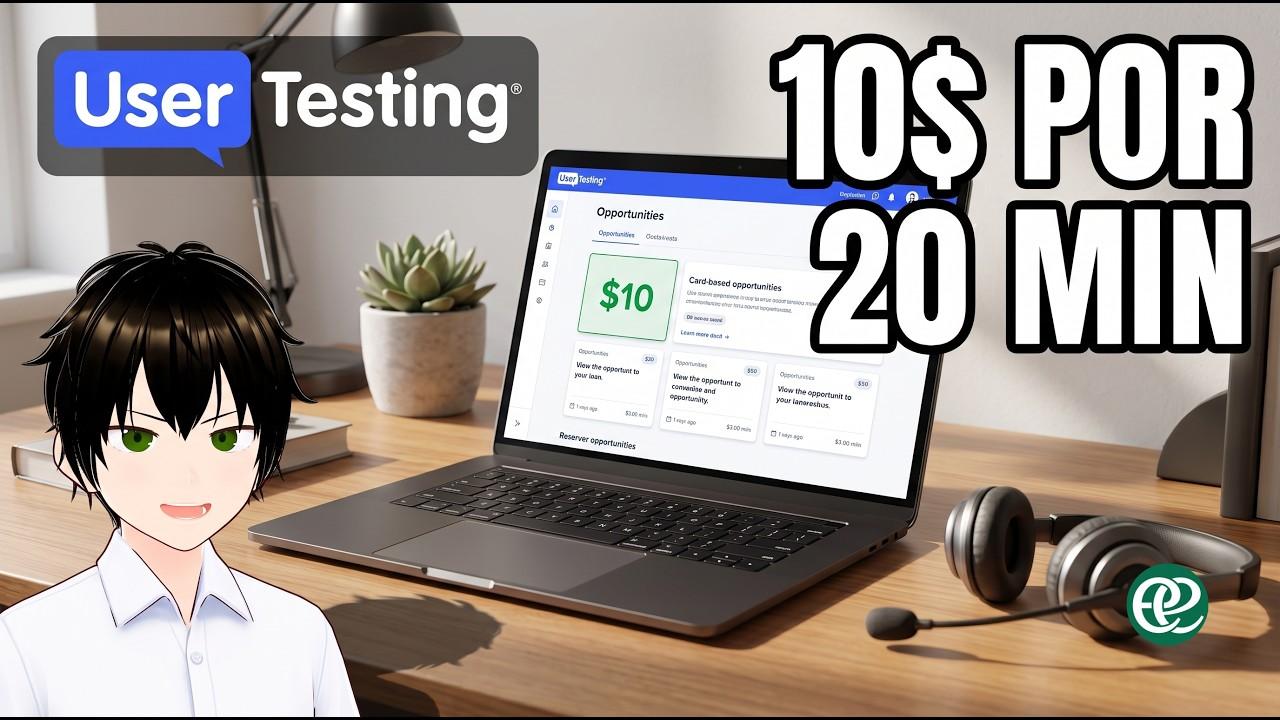
The third option is also done from home and is the best-paid of the "sit down and do it" options: getting paid to test websites and apps before they launch. Here's how it works: you're given a website or app, you complete a task while screen-recording yourself, and you narrate out loud what you understand and what confuses you. It sounds trivial, but it's gold for companies, because it shows them exactly where real users get stuck. The three reference platforms are these, with ballpark figures you can also find summarized on each platform's own site once you sign up:

Quick comparison

PlatformBallpark payWhat makes it different
UserTesting~$10 per 15-20 min test; live interviews from $60+The biggest one, but with heavy competition for each test
Userlytics$3-10 per short test via PayPal; $50+ for long interviewsA solid number of Spanish-language studies
Testbirds€15-30 per standard usability testPlatform available in Spanish, mostly Europe-focused

2026 reference figures based on data published by each platform; they can vary by study and your profile.

Keep one thing in mind for all three: tests don't show up every day, they show up when you match what the client is looking for, and many fill up before you can join. This isn't a salary, it's an extra that drops in from time to time and, when it does, pays well. You can find the full guide on passing the entry exam in UserTesting: how to pass the exam and every option in the usability testing category.

4. Delivery and errands: cash in hand today

The fourth option already gets you out of the house, and it's the only one on this list where you can have cash in your pocket today. In Spain that means Glovo, Uber Eats, or Just Eat; in Latin America, Rappi or PedidosYa. You sign up, go online whenever you want, and get paid per delivery.

What the app doesn't tell you

Always subtract your real costs

Fuel, maintenance, and vehicle wear are on you. What the app shows isn't what lands in your pocket: always subtract that cost before comparing this option with anything else on this list.

That said, if you need fast money and not money in a month, this is about as immediate as it gets.

5. Services in your neighborhood: the one with the most upside

The fifth option is the oldest one in the world, and also the only one of the seven that can grow into something bigger: offering a physical service in your own neighborhood. Washing windows, assembling furniture, helping with a move, mowing lawns, walking dogs, or clearing out storage rooms. Things people need, don't know how to do, or don't want to do, and pay for on the spot in cash. No commission-taking platform is required: a listing on a local classifieds site, a flyer on the supermarket board, and your neighborhood group chat are enough to get started.

Why this one is different from the other six

The other six have a ceiling: you do one survey, you get paid for one survey, and tomorrow you start from zero again. But if you wash the windows of a building and do a good job, that building calls you every month and recommends you to the one next door. That's where a weekend side gig turns into recurring clients. If you're only going to do one of the seven and your weekends are free, make it this one. You'll find more ideas and real stories in 6 ways to make extra money in your own city.

6. Money that's coming (but isn't here yet): Spain's bottle deposit scheme

The sixth option isn't fully usable yet, and we need to be precise about the date, because things changed just in the past few days. Spain is legally required to roll out a deposit-return scheme (SDDR): you pay a few extra cents when buying a drink, and get them back by returning the empty container to a supermarket machine. The planned deposit is at least €0.10 per container, covering plastic bottles up to three liters, cans, and cartons. This is a Spain-specific scheme, included here because it directly relates to the video this article is based on and because similar return schemes already exist in several European countries.

Breaking: the launch has been delayed

No, you can't get paid for your containers yet

The legal deadline was November 22, 2026, but in mid-November it was already confirmed the system won't be ready: there is still no designated managing entity, and supermarkets won't start charging or refunding the deposit on that date. There is, for now, no new official date.

So there's nothing to do right now except wait. But it's worth keeping on your radar: the day it actually launches, there will be plenty of discarded containers around that already carry a paid deposit, and in the first months whoever pays attention can make easy money collecting them.

7. The big one: claiming back the car-cartel overcharge (Spain)

And we get to the one that moves the most money in this whole article. This one is Spain-specific, but worth knowing if you or your family bought a car there in that window. For years, practically every car brand sold in Spain shared pricing information with each other to keep prices high. Spain's competition authority sanctioned this, Spanish and European courts have kept confirming it, and anyone who bought a new car during that period overpaid and is entitled to claim it back. We're talking about nearly every brand: Renault, Peugeot, Citroën, Ford, Opel, Toyota, Nissan, Hyundai, Kia, BMW, Mercedes, Audi, Volkswagen, and several more. The period that counts is new cars bought between February 2006 and August 2013. The refund runs between 2% and 5% of the car's price plus interest, depending on the brand and the specific court ruling: for a €15,000 car, that's between €300 and €750, though some law firms and recent rulings cite average amounts above €1,000-1,200 once accumulated interest is included.

The date matters: it's not "sometime in 2026", it depends on the brand

This is where this guide differs from what you'll read elsewhere

The claim deadline isn't the same for every brand: it starts counting from when the sanction against each manufacturer became final, so it expires on different dates. As of mid-November 2026, the deadline for brands like Honda, Mercedes-Benz/Smart, or Opel has already passed according to the most-cited legal guides. The window that's still genuinely open and racing against the clock is Toyota and Lexus, with a deadline around December 1, 2026.

If your car is from a brand whose deadline already passed, it's not necessarily over: the statute of limitations is still being argued case by case in court, and several law firms will still review a file. But if it's a Toyota or Lexus bought in that window, this isn't a "get to it eventually" claim: it's literally a this-week claim.

What you need to file a claim

The purchase invoice or contract for the car (or, failing that, the registration document showing the first registration date) is what any law firm or specialized claims platform will ask for first. If your parents bought it and the car is still in the family, it still counts. This isn't a subsidy or a loan: it's money you overpaid that gets returned to you. If your car falls within those dates, don't wait — contact a consumer-law specialist or a claims platform as soon as possible.

Quick questions

Which of the seven pays out fastest?

Delivery apps like Glovo or Uber Eats: you sign up, go online, and get paid the same day. Reward apps also pay fast, but in much smaller amounts.

Can I combine several of these at once?

Yes, and that's actually the norm: most people who make a real extra combine two or three (for example, reward apps during dead time plus Prolific or usability testing when they have a longer free block).

Can you really claim car-cartel money without a lawyer?

Yes, but you don't do it alone: it's normal for a law firm or specialized platform to handle the claim for a percentage of whatever is recovered, with no upfront cost if the case is lost.

When will Spain's bottle deposit scheme actually start paying out?

As of this guide, there's still no confirmed official date. The legal deadline (November 22, 2026) has already been confirmed as missed; we'll update this article once a new date is announced.

Summary: all seven, ranked

If you take just one table away from this article, make it this one:
MethodSpeedApproximate money
1. Reward appsImmediateA few dollars/week
2. ProlificDays$8-12/hour of studies
3. Testing websites/appsVariable (depends on availability)$10-60/test
4. Delivery and errandsSame dayDepends on hours online
5. Neighborhood servicesSame dayVariable, with recurring-client potential
6. Bottle deposit schemeNot yet (delayed)From €0.10/container once live
7. Car-cartel refund (Spain)Weeks (closing window)€300 – €3,000 depending on the car
Everyone out there is trying to sell you an automated AI business that makes money while you sleep. That's fine, but if you have a bill due on the 30th, it won't help you today. What helps is this: claiming back what's already yours and trading a few hours for cash. Nothing more. On ExtraEarnings.co you'll find plenty more ways analyzed one by one to make some extra money. If this article helped, also check out our guide on mistakes that stop you from making money online before diving into any of these seven.
Back to blog

No comments yet. Be the first to leave yours on YouTube!

Public comments retrieved from YouTube · YouTube Terms · Privacy

Share

Related articles